Smart Thermostats and Air Conditioning: Are They Worth It? (2026 Guide)
Smart home technology has changed the way we live, and thermostats are arguably the single most impactful upgrade you can make. If you use air conditioning to keep your London or St. Thomas home comfortable in the summer, a smart thermostat could be a game‑changer for both convenience and your wallet. But is the investment really worth it?
For many homeowners, the thermostat is a "set it and forget it" white box on the wall. But in 2026, with rising energy costs and increasingly hot Ontario summers, that little box is your primary line of defense against skyrocketing utility bills.
At My Fireplace, we are frequently asked if upgrading to a high-tech model like the Lennox iComfort series is truly necessary. In this deep dive, we will explore the math behind the energy savings, the "cool factor" of remote control, and why modern air conditioners actually need smart controls to run effectively.
Key Points Summary
Smart vs. Programmable: Smart thermostats use Wi-Fi, geofencing, and learning algorithms, whereas programmable ones rely on rigid schedules.
Energy Savings: Expect to save ~10% on cooling costs annually; the device often pays for itself in under 2 years.
Humidity Control: Advanced models monitor humidity, crucial for comfort in damp Ontario summers.
Remote Access: Control your home's climate from anywhere in the world via smartphone app.
Compatibility: Essential for modern variable-speed AC units and heat pumps; professional installation is recommended to ensure proper wiring (C-wire).
What Makes a Thermostat "Smart"?
To understand the value, we first need to distinguish between "programmable" and "smart."
A programmable thermostat (the standard for the last 20 years) allows you to set a schedule—for example, turning the AC down at 8:00 AM when you leave for work and back up at 5:00 PM. While better than manual controls, they are rigid. If you come home early, the house is hot. If you stay late, you are cooling an empty house.
A smart thermostat connects to your home's Wi-Fi network. It doesn't just execute a program; it thinks.
Learning Algorithms: Devices like the Lennox iComfort S30 or S40 learn your behavior over time. They notice you usually turn the temp down at 10 PM and start doing it for you automatically.
Geofencing: Using the GPS on your smartphone, the thermostat knows when you leave the driveway and when you are miles away. It automatically shifts to "Away" mode to save energy and begins cooling the moment you turn onto your street.
Weather Monitoring: Smart thermostats check local London, Ontario weather reports. If a heatwave is predicted, they can pre-cool your home during off-peak hours to ensure comfort without spiking your bill.
5 Major Benefits of Pairing Smart Thermostats with AC
1. The Financials: Real Energy Efficiency
The biggest selling point is the potential for savings. According to Energy Star, certified smart thermostats can save homeowners approximately 8% on heating and 10% on cooling bills annually.
When your AC is running, it consumes a significant amount of electricity. By eliminating "human error"—like forgetting to adjust the dial before a weekend trip—a smart thermostat ensures you never pay to cool an empty house.
Usage Reports: Many models provide detailed monthly reports showing exactly how many hours your system ran. This data allows you to tweak your habits for even greater savings.
Peak Savings: Some utility providers offer programs that sync with smart thermostats to slightly adjust usage during peak demand times, offering you credits on your bill in return.
2. Remote Control: Comfort on Command
Imagine you are on your way back from a week-long vacation. You turned the AC off to save money, so your house is currently sitting at a stifling 30°C. With a traditional thermostat, you would come home to a sauna and wait hours for it to cool down.
With a smart thermostat, you simply open the app on your phone while you're at the airport, set the temperature to a cool 21°C, and walk into a perfectly comfortable home. This isn't just luxury; it’s total control over your environment.
Need a system upgrade? Check out our latest Air Conditioning units that pair perfectly with smart technology.
3. Humidity Control (The Secret Comfort Factor)
In Southwestern Ontario, it’s not just the heat; it’s the humidity. Standard thermostats only read temperature. If it's 23°C but 90% humidity, you still feel sticky and uncomfortable.
Advanced smart thermostats utilize "feels like" temperature logic. They monitor indoor humidity levels and can run your air conditioner specifically to dehumidify the air, even if the temperature setpoint has been reached. This prevents that clammy feeling and improves indoor air quality.
4. System Health & Maintenance Alerts
Your HVAC system is a complex machine. A smart thermostat acts as a 24/7 diagnostic tool.
Filter Reminders: Instead of guessing when to change your filter, the system tracks actual usage hours and sends a notification to your phone when it's time for a fresh one.
Safety Warnings: If your furnace or AC starts behaving erratically—such as taking too long to reach the target temperature—the thermostat can alert you before the system breaks down completely. This early warning can save you the cost of an emergency repair service call.
5. Smart Home Integration
We live in a connected world. Your thermostat should speak the same language as the rest of your home. Most major smart thermostats integrate seamlessly with:
Google Home & Amazon Alexa: "Hey Google, set the temperature to 20 degrees."
Smart Vents: Open or close vents in specific rooms based on occupancy.
Home Automation: You can set "scenes" where locking your smart front door automatically triggers the thermostat's "Away" mode.
Is It Worth the Investment? The Verdict
For the vast majority of homeowners, the answer is YES.
While a smart thermostat costs more upfront ($200 - $500) compared to a basic $50 model, the Return on Investment (ROI) is rapid.
Payback Period: With energy savings averaging $150–$200 per year for typical Ontario homes, the device often pays for itself in under two years.
Rebate Eligibility: In 2026, various programs like the Save on Energy incentives often provide rebates for installing smart controls, further lowering the initial cost.
You should definitely upgrade if:
You have an irregular schedule (shift work, frequent travel).
You have a large home with zoned heating/cooling.
You are installing a new, high-efficiency AC or Heat Pump. (New variable-speed motors require communicating thermostats to function properly).
However, if you are retired, home 24/7, and extremely diligent about managing your manual thermostat, the savings might be marginal. But even then, the convenience factor is undeniable.
How to Choose the Right Model
Not all smart thermostats are created equal. At My Fireplace, we recommend sticking to proven brands that integrate well with high-quality equipment.
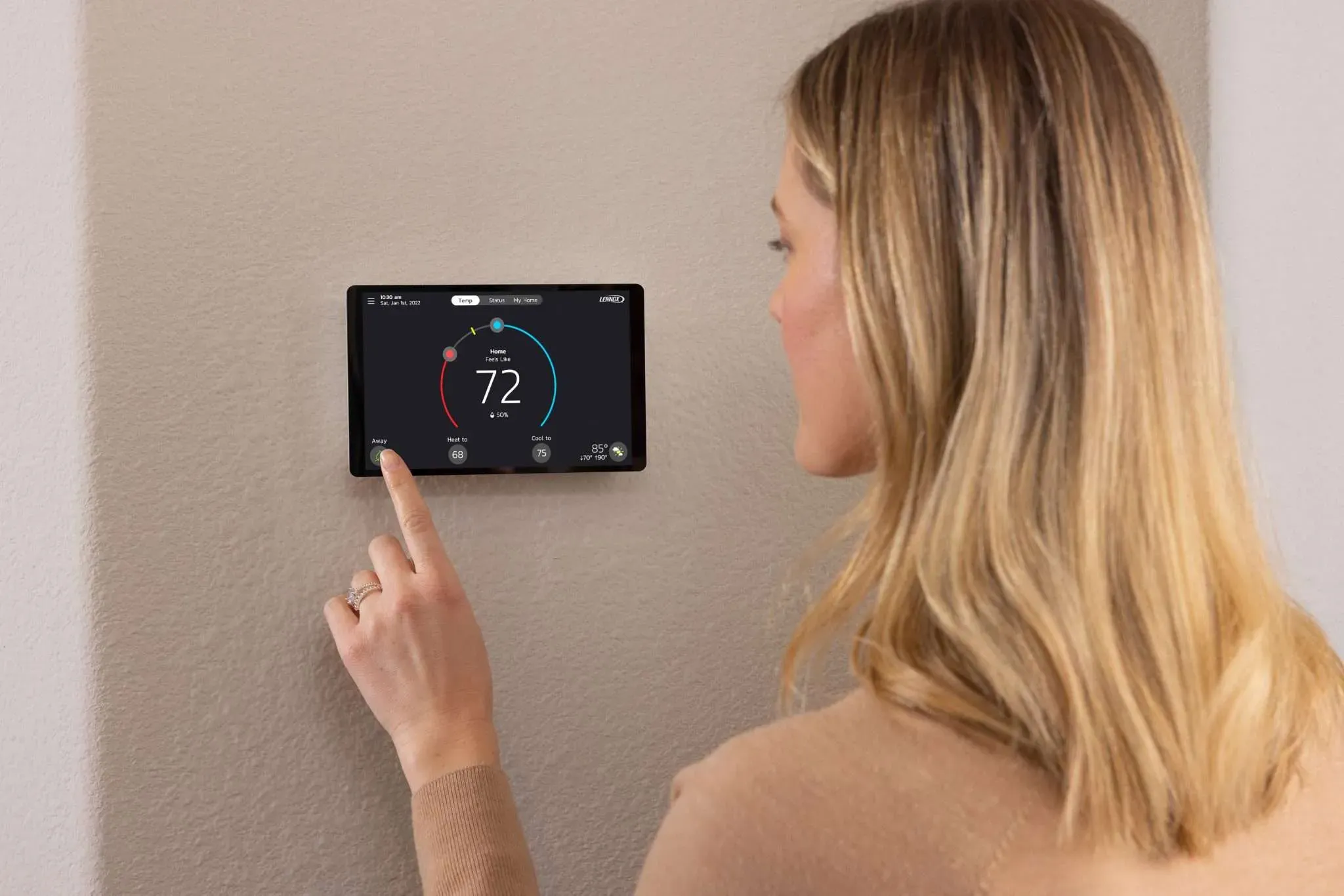
For Lennox Systems: The Lennox iComfort S30 or S40 is the gold standard. It acts as a "communicating" center, talking directly to the motors in your furnace and AC to ramp speed up and down by 1% increments for ultimate precision.
For General Use: Brands like Ecobee and Google Nest are excellent "universal" options that work with most standard 24-volt systems.
Check Compatibility: Before buying, you must ensure your home has a "C-wire" (Common wire). Older homes may need wiring upgrades to support the constant power needs of a Wi-Fi screen. Our Service Team can inspect your wiring during a routine maintenance visit.
Installation: DIY vs. Pro
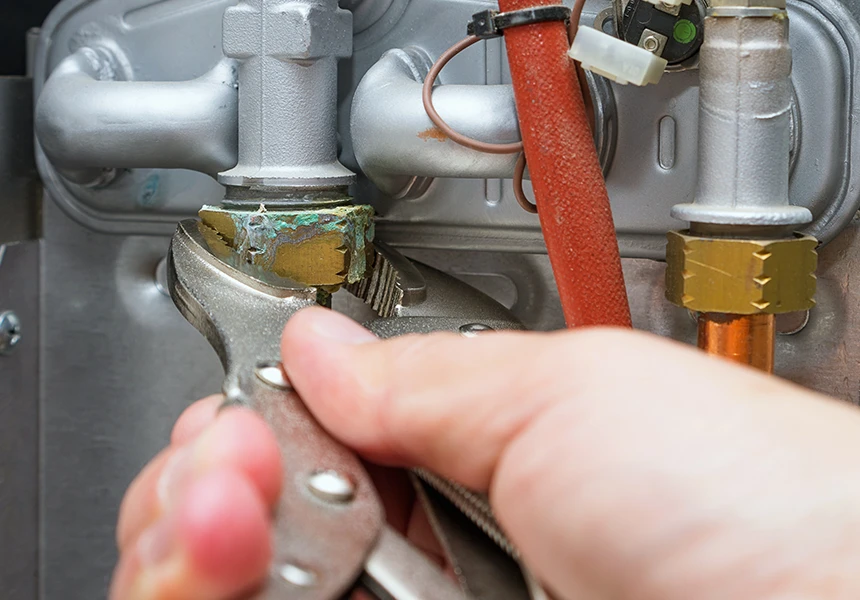
While many smart thermostats are marketed as DIY, installation can be tricky. Incorrect wiring can blow fuses on your furnace control board or, worse, damage your new compressor.
The "C-Wire" Issue: If your wall lacks a common wire, you may need an adapter kit or new wiring run through your walls.
Dual Fuel Systems: If you have a heat pump and a gas furnace (hybrid heating), the wiring configuration is complex. A DIY mistake here can result in your AC running simultaneously with your furnace, causing massive damage.
For peace of mind, we recommend professional installation, which is often included or discounted when you purchase a new HVAC system from us.
Old vs. New: The Cost of Comfort. Outdated manual thermostats (left) often lead to wasted energy and high utility bills. Upgrading to a smart thermostat, like the Lennox model shown with its companion app (right), provides precise control and proven energy savings.
Frequently Asked Questions
Do smart thermostats actually save money on air conditioning? Yes. According to Energy Star, smart thermostats can save approximately 10% on cooling costs annually. They achieve this by eliminating human error, using geofencing to detect when you are away, and optimizing runtime based on weather conditions.
What is the difference between a programmable and a smart thermostat? A programmable thermostat runs on a rigid, pre-set schedule. A smart thermostat connects to Wi-Fi, learns your habits over time, can be controlled remotely via an app, and can automatically adjust temperatures based on whether you are home or away.
Do I need a "C-wire" to install a smart thermostat? Most modern smart thermostats with Wi-Fi screens require a "C-wire" (Common wire) to provide constant power. If your current system lacks this wire, you may need an adapter kit or professional wiring installation to prevent damage to your HVAC system.
Conclusion: Take Control of Your Comfort
Upgrading to a smart thermostat is one of the most affordable ways to modernize your home and lower your carbon footprint. It bridges the gap between comfort and efficiency, ensuring you never have to choose between saving money and staying cool.
Ready to make the switch? Whether you are looking to install a new Lennox smart thermostat, need advice on compatibility, or are planning a full HVAC replacement, the experts at My Fireplace are here to help.
👉 Don't wait for the next heatwave. Contact us today to schedule your consultation and step into the future of home comfort.
Smart Thermostats and Air Conditioning: Are They Worth It?
Smart home technology has changed the way we live, and thermostats are one of the easiest upgrades to make. If you use air conditioning to keep your home comfortable in the summer, a smart thermostat could be a game‑changer for both convenience and energy savings. But are they really worth it?
Lorem ipsum dolor sit amet, consectetur adipiscing elit. Suspendisse varius enim in eros elementum tristique. Duis cursus, mi quis viverra ornare, eros dolor interdum nulla, ut commodo diam libero vitae erat.
Lorem ipsum dolor sit amet, consectetur adipiscing elit. Suspendisse varius enim in eros elementum tristique. Duis cursus, mi quis viverra ornare, eros dolor interdum nulla, ut commodo diam libero vitae erat.